
The Bombay High Court in Goa ruled that provisions of the Representation of the People Act and Registration of Electors Rules remain in force during a Special Intensive Revision of electoral rolls. The court directed authorities to include six members of a Goa family in the voter list, criticising the Election Commission's system for rejecting Form 8 applications for residence change, stating it denied citizens their right to vote and amounted to suspending legal provisions.

Goa Forward Party chief Vijai Sardesai has alleged that Nepalese nationals were added to the state's electoral rolls during the Special Intensive Revision (SIR) and that voters were illegally shifted between constituencies. He has demanded an impartial investigation into these alleged irregularities, calling for deletion of illegal entries and action against those responsible.

Opposition parties are questioning the Election Commission's intentions behind the second phase of special intensive revision of electoral rolls in 12 states and Union Territories. The BJP has slammed the Congress and called the opposition a 'herd of dissatisfied souls'.

Sourav Ganguly and Harbhajan Singh were confirmed as the representatives of the Full Members of the BCCI.
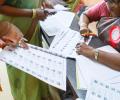
The Election Commission has announced a Special Summary Revision of electoral rolls in 17 states and Union territories, including those facing assembly polls next year. This initiative aims to enrol new voters, correct existing entries, and enhance the accuracy of voter lists, with January 1, 2027, set as the qualifying date.

The Election Commission of India has announced decisions addressing concerns raised by two election commissioners, Sukhbir Singh Sandhu and Vivek Joshi, over the past 10 months. These issues included changes to voter registration forms, access to the electoral roll database, the handling of Goa's 97 voters, communications issued without full commission approval, oversight of the IT division, and appeals against voter restoration. The EC has provided responses and outlined steps to resolve these internal disputes and improve transparency and compliance.

The Election Commission of India clarified to the Bombay High Court that the absence of a voter's name from a draft Special Intensive Revision (SIR) roll does not equate to deletion, as SIR is a fresh preparation of the electoral roll. This clarification came during a hearing on a writ petition filed by a Goa resident whose family's names were missing from the SIR roll. The court has reserved its verdict.

India's Election Commission's centralised voter database systems, ERONET and ECINet, are under scrutiny following concerns raised by Election Commissioners Sukhbir Singh Sandhu and Vivek Joshi regarding the centralisation of electoral rolls and control available to state election officials. The article explains how these systems work and why they are currently in the news.

Data reveals that the number of voters in Uttar Pradesh, Uttarakhand, Goa, Punjab, and Manipur has decreased by up to 13.24 per cent following the Special Intensive Revision (SIR) of electoral rolls. Across these five states, the electorate shrank by approximately 2.29 crore, a 12.2 per cent reduction, with Uttar Pradesh accounting for nearly 90 per cent of this drop. These states are slated for assembly polls early next year, and the Election Commission is conducting further revisions to include eligible voters.
A petition has been filed in the Supreme Court challenging Chief Election Commissioner Gyanesh Kumar over alleged statutory duty violations and the controversial deletion of 13 crore voters during the Special Intensive Revision of electoral rolls, claiming decisions were made without the concurrence of other election commissioners.

The Supreme Court is set to hear pleas challenging Chief Election Commissioner Gyanesh Kumar's alleged unilateral decisions without the concurrence of other election commissioners. The petitions seek his suspension and question actions like altering voter registration forms and handling electoral roll revisions in Goa and West Bengal, highlighting concerns over the multi-member character of the Election Commission.
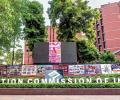
The Election Commission has clarified that its ECINet platform is decentralised, with statutory functions performed only by designated officials, not headquarters staff. This comes after concerns were raised about the centralisation of electoral roll databases. The EC also defended the legality of an additional declaration sought from new voters during the Special Intensive Revision, citing unanimous commission approval and a Supreme Court judgment.

The Supreme Court stated it has not approved any modifications to Form 6, used for electoral roll inclusion, during the Special Intensive Revision. This observation came during the hearing of a Public Interest Litigation (PIL) challenging alleged unilateral decisions by the Chief Election Commissioner regarding changes to Form 6 and electoral roll revisions in states like Goa and West Bengal, without the concurrence of his colleagues. The court issued notice on the plea, highlighting concerns over collective decision-making within the Election Commission.

The Bombay High Court's Goa bench has ruled that draft electoral rolls cannot be the sole basis for deleting names from voter lists, asserting that administrative software cannot supersede statutory laws. The court questioned the Election Commission of India's authority to delete voters without a hearing, highlighting concerns over the ERONET system's limitations and its potential to disenfranchise citizens.
'I was just thinking about me, because my rights have been affected. That's it.' 'I am an ordinary citizen of this country, and I am expecting my rights (as a voter) to be restored.'
The Election Commission has directed five states - Goa, Manipur, Punjab, Uttar Pradesh, and Uttarakhand - to transfer officers involved in election work ahead of the 2027 assembly polls. This move, a standard practice for fair elections, targets officers in their home districts or those completing three years in a district by May 2027, covering various administrative and police roles.

The prominence of migration highlights a longstanding problem for India's electoral system.

The Congress party has launched nationwide protests against Chief Election Commissioner Gyanesh Kumar, demanding his removal. Accusing him of acting in favour of the BJP and citing alleged irregularities in electoral roll revisions (SIR), party workers burned effigies and clashed with police. Opposition parties plan further action, including a meeting of the INDIA bloc to strategize for his ouster.

Ajinkya Shinde, a native of Latur, Maharashtra, has taken charge of the Cockroach Janta Party's (CJP) "Jantar Mantar 2.0" protest in Delhi. This follows the detention of CJP's top leaders, including Dipke, Saurav Das, and Ashutosh Ranka, by Delhi Police on Saturday. Shinde, a former computer engineer and AAP activist, is leading the agitation against Chief Election Commissioner Gyanesh Kumar over alleged voter-list manipulation. The national capital saw a significant crackdown on Saturday, with nearly 500 protesters and leaders detained.
The Election Commission of India has addressed reports of internal dissent among its commissioners and clarified that all Special Intensive Revision (SIR) orders and Form 6 updates for voter enrolment received unanimous consent and were upheld by the Supreme Court. The EC also announced measures to ease the process for voters issued notices, including doorstep document collection and extended deadlines in Delhi and Maharashtra, while affirming its commitment to transparent decision-making and meticulous compliance with directives.

The Election Commission's Special Intensive Revision (SIR) of electoral rolls has completed one year, leading to the deletion of nearly six crore voters across 19 states and Union territories. This exercise, which began in Bihar, has faced opposition criticism but was upheld by the Supreme Court. The purification drive has significant implications, including linking voter data to social security benefits in some states.

Former Chief Election Commissioner S Y Quraishi has strongly criticised the Election Commission's ongoing Special Intensive Revision (SIR) of electoral rolls, stating it is 'focussed more on exclusion' and has 'played havoc with democracy' by disturbing free and fair elections.

The portal has received over 36,000 registrations since October 3, with education and corruption emerging as the leading grievances across states and Union Territories.

'Their functioning is flawed, they are not accountable, they are opaque, they are non-transparent, they have lost credibility.'

The Cockroach Janta Party (CJP) is organising a protest in New Delhi, demanding the resignation of Chief Election Commissioner Gyanesh Kumar over alleged electoral irregularities and the deletion of names from voter rolls. CJP leaders claim activists have been detained and faced restrictions while travelling to the capital for the demonstration.
The Election Commission removed 6.5 crore electors from the draft electoral rolls of nine states and three Union territories as part of the Special Intensive Revision (SIR). The removals are due to voters being absent, shifted, deceased, or duplicates.
As many as 90,000 electors in Goa have either been found absent, shifted, deceased or possessing duplicate voter cards in the ongoing Special Intensive Revision (SIR) in the state, a senior official said on Sunday.

Modi's greater weakness is his inability since July when he directed the exit of Dharmendra Pradhan, to come up with a political counter strategy. Security measures and executive orders as seen in recent days will only likely further weaken him and make him as lame duck a premier as many prior to him, Indira Gandhi and Manmohan Singh included, observes Nilanjan Mukhopadhyay.
The Election Commission is preparing to launch the third phase of the Special Intensive Revision (SIR) of voters' lists, potentially covering 22 states and Union Territories with approximately 40 crore electors.
The Bombay High Court's Goa bench has criticised the Election Commission of India (ECI) for rejecting voter registration forms (Form 8s) during a Special Intensive Revision (SIR) process. The court emphasised that the ECI's primary objective is to ensure citizens can cast votes and that rejecting forms, even if incorrectly submitted, goes against this principle. The case arose from a petition by a family whose names were deleted from the voters' list after their Form 8s for address change were rejected.

The EC also underlined that for electors whose enumeration forms have not returned, the Booth Level Officers (BLOs) would identify a probable cause, such as absent, shifted, dead and duplicate entry based on an inquiry from the nearby electors and would note the same.

'Election Commissioners are Constitutional authorities and they are not supposed to go to the Cabinet secretary. They are not supposed to write letters. And if they are aggrieved, they should straight go to the President of India.'

A parliamentary committee is actively working to establish a mechanism for implementing the 'One Nation, One Election' reform, with its chairperson, PP Chaudhary, indicating that it could be fully operational by the 2029 general elections. Chaudhary highlighted that nearly 99 per cent of civil society stakeholders consulted have supported the proposal, which aims to mitigate an estimated Rs 7 lakh crore economic loss due to frequent polls.
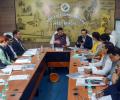
The Election Commission on Thursday extended the timeline for Special Intensive Revision (SIR) in six states and Union territories following requests from the chief electoral officers.
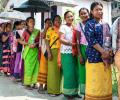
The Election Commission has ordered a 'Special Revision' of electoral rolls in Assam, with the final voter list to be published on February 10, 2026. The revision aims to ensure clean and accurate electoral rolls, with house-to-house verification taking place from November 22 to December 20.

The Election Commission will conduct phase two of the special intensive revision of electoral rolls in 12 states and Union territories between November and February, Chief Election Commissioner Gyanesh Kumar announced on Monday.
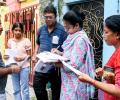
Election Commission's Special Intensive Revision (SIR) of voters' list commenced in nine states and three Union territories on Tuesday, amid objections from several parties with Chief Minister Mamata Banerjee leading the anti-SIR offensive in West Bengal with a rally in Kolkata and alleging 'silent, invisible rigging' through the exercise.

Admiral Prakash, who has been settled in Goa since his retirement, said SIR forms should be revised if they are not "evoking" the required information.
Special Intensive Revision (SIR), the Election Commission's voters' list cleanup exercise, will commence in nine states and three Union territories from Tuesday.
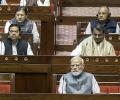
Parliamentary Affairs Minister Kiren Rijiju stated the government is open to discussing electoral reforms in the Rajya Sabha, urging the Opposition not to impose a timeline. Opposition parties staged a walkout after demanding an immediate discussion on the Special Intensive Revision of electoral rolls.
